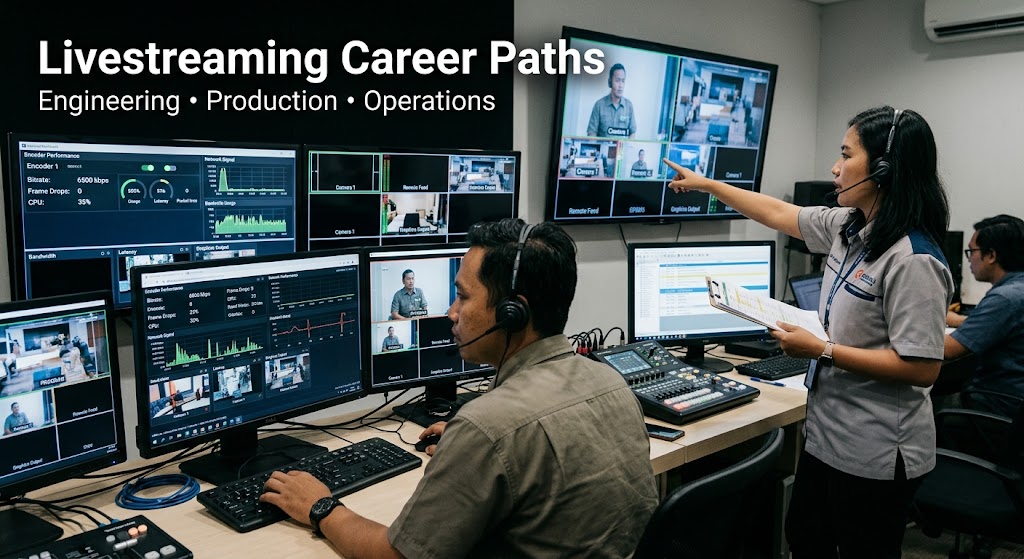
You don’t have to be the person on camera to build a career in live media. In fact, livestreaming careers increasingly include technical, production, operations, and audience roles that happen entirely behind the scenes. The money can be more predictable too, because companies, broadcasters, event organizers, and streaming platforms need people who can make the show work even when nobody notices them.
That distinction matters when looking at the wider streaming industry. U.S. Bureau of Labor Statistics data for May 2025 puts median pay for producers and directors at $90,360, while broadcast, sound, and video technicians had a median of $60,150, showing that technical and production paths can become substantial careers rather than side gigs.
1. The Hidden Livestreaming Careers Behind The Camera Are Where Technical Expertise Pays
The most interesting opportunities aren’t necessarily the jobs with “streamer” in the title. They sit inside production teams where one person’s technical decision can affect thousands of viewers at once.
Technical Director Controls The Show When It Goes Live
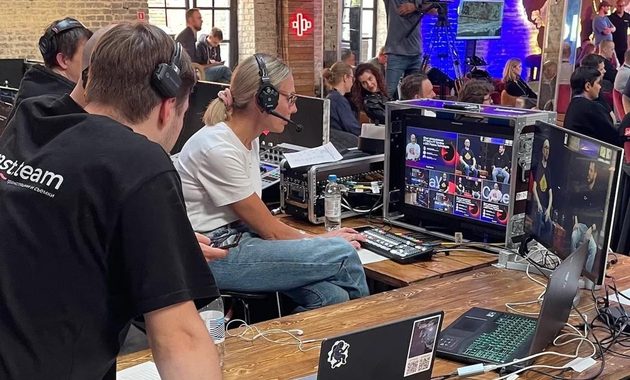
A technical director is responsible for the technical execution of a production, which can include switching sources, coordinating signal flow, monitoring equipment, and solving problems under pressure. A recent Technical Director listing in Jakarta, for example, asked for knowledge of audiovisual systems, broadcast software, switchers, audio mixers, routers, signal routing, troubleshooting, and team coordination.
That’s a very different skill set from simply knowing how to press “Go Live.” It also explains why experienced technical directors can become valuable in esports, concerts, corporate broadcasts, sports productions, and large creator events.
The career path typically starts with smaller production responsibilities and grows through hands-on experience. BLS notes that producers and directors commonly build experience through related production roles before moving into higher-level responsibilities.
Live Video Engineer Solves The Problems Viewers Never See
A live video engineer works closer to the infrastructure and signal side of production. The job can involve encoding, video quality, network behavior, routing, hardware, monitoring, and troubleshooting when a broadcast suddenly starts falling apart.
This is one of the strongest broadcasting jobs for someone who enjoys technology more than performing. BLS reports that sound engineering technicians had a May 2025 median wage of $73,130, while the highest-paid 10% of broadcast, sound, and video technicians earned more than $108,440.
The important catch is that “high paying” doesn’t mean entry-level. Employers usually pay more for people who can diagnose problems quickly because a mistake during a major broadcast can become very expensive.
Production Operations Turns Chaos Into A Repeatable System
Production operations roles sit between creative teams and technical teams. They may coordinate schedules, assets, guests, platforms, production checklists, and the people responsible for getting everything on air.
This is particularly useful for people who are organized but don’t want to spend an entire day operating cameras. BLS reports that media streaming distribution services, social networks, and other media networks accounted for 13% of producer and director employment in 2025, showing that production careers now extend well beyond traditional television.
Chat Moderator Manager Is More Than Watching Comments
Large broadcasts need moderation systems, not just someone deleting spam. A moderator manager can create escalation rules, coordinate teams, manage community standards, and monitor audience behavior during high-volume events.
The earning potential varies considerably because this role sits closer to community operations than engineering. Still, it becomes more valuable when combined with analytics, platform knowledge, crisis handling, and team leadership.
The common thread across these jobs is simple: you are being paid to make the broadcast reliable, not merely to appear in it.

6
2. Compare The Skills And Pay Before Choosing A Livestreaming Career Path
Not every role has the same barrier to entry, and that’s actually good news. Someone with a networking background may have a natural advantage in engineering, while someone with strong communication and organization skills could move faster toward production management.
Technical Skills Create A Stronger Barrier To Entry
Roles involving signal routing, encoding, broadcast systems, and live troubleshooting tend to require deeper technical knowledge. That barrier can work in your favor because fewer candidates can immediately perform under pressure.
A recent Indonesian live production listing illustrates this clearly, asking candidates to understand OBS, audiovisual equipment, signal routing, troubleshooting, and production planning rather than simply content creation.
Creative Production Has A Wider Entry Point
Producer, director, show caller, and production coordinator roles can be entered from several backgrounds. Communication, planning, storytelling, leadership, and production experience can matter as much as technical knowledge.
The U.S. BLS currently projects 4% employment growth for producers and directors from 2025 to 2035, with roughly 12,100 openings annually on average.
The Money Depends On Industry And Seniority
Don’t take a single salary figure as a promise. Location, employer, freelance status, event size, specialization, and years of experience can dramatically change earnings.
For context, BLS reports that producers and directors working in media streaming distribution services, social networks, and related media networks had a $98,520 median annual wage in May 2025, compared with $65,230 in television broadcasting stations.
That difference is one reason researching the employer and specialization matters more than chasing a generic job title.
Choose The Path That Matches Your Existing Advantage
A practical starting point looks like this:
- Technical background → live video engineering, broadcast engineering, technical direction.
- Strong organization → production operations, show coordination, production management.
- Communication skills → moderation leadership, community operations, producer roles.
- Creative experience → directing, show production, graphics, camera, or content production.
This makes a tech skill transition less intimidating because you’re not starting from zero. You’re transferring existing abilities into a different production environment.
6
3. How To Break Into Behind The Scenes Livestreaming Jobs Without Becoming A Creator
The easiest mistake is applying for jobs before you have evidence that you can actually operate. Build a small portfolio that demonstrates the work employers care about, even if your first projects are personal or volunteer productions.
Start with one production setup and document it. Record your OBS scenes, audio routing, troubleshooting process, stream checklist, and post-stream analysis so recruiters can see your thinking rather than just a certificate.
If you’re unsure which direction fits you, this guide to career paths in livestreaming can help you map technical, production, and operational roles before committing to one specialization.
For behind the scenes work, a portfolio can include:
- A complete OBS production setup
- A documented troubleshooting case
- A sample live-production rundown
- Audio and video configuration
- A simulated technical-director workflow
- Stream analytics and post-production review
- A short explanation of how you handled a technical failure
You don’t need a giant studio. You need evidence of competence.
And don’t overlook smaller opportunities. Local events, esports tournaments, churches, universities, agencies, corporate webinars, shopping livestreams, and creator teams can provide the repetition that turns theory into professional experience.
The smartest move is usually to specialize first and broaden later. Once you’re known for one valuable skill, such as live encoding, production switching, or technical direction, adding adjacent skills becomes much easier.
That’s the real hidden market in livestreaming careers. The audience may remember the host, but the people keeping the broadcast alive are often the ones building the longer technical career.
Q&A
1. Which livestreaming career is best for someone with an IT background?
Live video engineering, broadcast engineering, and technical direction are strong matches because they reward troubleshooting, networking knowledge, software familiarity, and systems thinking. You may still need hands-on production experience because live environments behave differently from ordinary IT systems.
2. Can behind-the-scenes livestream jobs really pay more than being a creator?
They can, but there is no universal rule. Creator income can be extremely variable, while salaried technical and production positions can offer more predictable compensation, benefits, and career progression.
3. Do I need a broadcasting degree to enter the industry?
Not necessarily. Formal education can help, but practical experience and a strong portfolio are particularly useful for technical roles. Current job listings show that employers may focus heavily on specific tools, troubleshooting ability, production experience, and communication skills.


Natsumi Kurose is a former digital learning coordinator who spent more than eight years helping universities, language schools, and professional training providers deliver live online classes.
She has worked with instructors on camera preparation, audience interaction, webinar structure, and technical rehearsal. Her writing focuses on livestreaming education, practical skills, online certifications, and learning programs for aspiring hosts and digital media professionals.